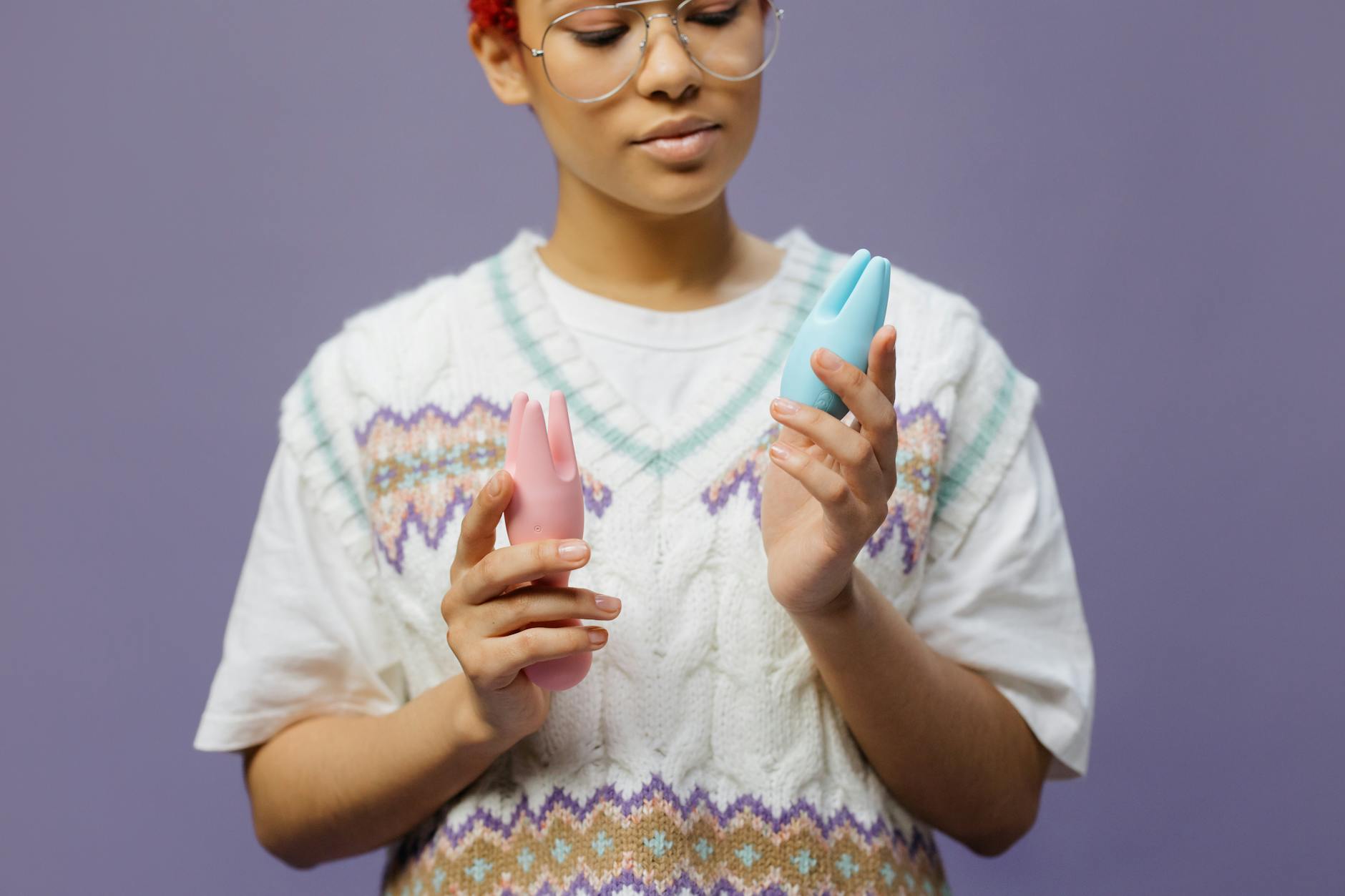
Let's talk about what sexual dissatisfaction actually does
It messes with your head in ways that go way beyond the physical. When sex hasn't felt good, or when a partner's response made you feel like your body was the problem, you don't just stop enjoying pleasure. You stop trusting yourself. You second-guess your responses. You wonder if something's wrong with you.
Honestly, that self-doubt is the hardest part to fix. And you can't fix it with a partner present, not right away. You need to rebuild that trust alone first. That's where a lemon vibrator comes in.
Why solo exploration matters after disappointment
When you've experienced sexual dissatisfaction, your nervous system has learned to be defensive. Your brain is running a protective script: "This didn't feel good before, so I'd better not get my hopes up." That script keeps pleasure at arm's length, even when the conditions are completely different.
Solo time with a lemon vibrator rewrites that script because there's no audience, no performance pressure, and no one else's rhythm to adapt to. You're not trying to come for someone else. You're not monitoring whether they're bored or impatient. You're just exploring what feels good in your own body, at your own pace.
This isn't about being selfish. It's about remapping your nervous system so that pleasure feels safe again.
The first session: permission and low stakes
Set aside 20 to 30 minutes when you won't be interrupted. Not an hour, not five minutes. Just enough time to move past the awkwardness without it feeling like a task.
Start with your clothes on. Hold the lemon vibrator. Feel its weight, its shape, its texture. Run your fingers over it. This sounds simple, but you're doing something crucial: you're introducing your body to a new sensation without the pressure to perform or respond in any particular way.
Turn it on at the lowest setting and apply it over your underwear or pants to your outer thigh. Not your clitoris, not yet. Just your thigh. Notice what the sensation feels like. Notice whether it feels good, neutral, or uncomfortable. None of those answers are wrong.
Many people who've experienced sexual disappointment find that giving themselves permission to say "that doesn't feel good" is actually more powerful than finding something that does. You're rebuilding trust in your own signals.
Building toward direct stimulation
Once you've spent a few sessions getting familiar with the vibrator at the lowest intensity on non-sensitive areas, you can move closer. Still fully clothed. Apply it over your underwear to the general clitoral area, but don't press hard. Let the vibration do the work.
When you're ready for direct contact, make sure you're actually aroused first. Spend five to ten minutes touching yourself in ways that feel good, or just thinking about something that turns you on. Arousal changes how sensation feels. When you're aroused, stimulation that felt overwhelming before might feel exactly right.
When you finally use the lemon vibrator directly on your clitoris, start at pattern one or two. This matters. After dissatisfaction, your clitoris can feel hypersensitive or weirdly numb. Low intensity lets you find the edge where sensation starts to feel good without becoming overwhelming.
The patience part (and why it matters)
Here's the part nobody talks about: rebuilding sexual confidence takes time, and there will be sessions where nothing happens. Where the vibrator doesn't feel like anything. Where you feel frustrated or bored. That's normal. That's your nervous system recalibrating.
Don't turn this into another test you can fail. You're not trying to have an orgasm. You're just trying to collect neutral or positive data about your body feeling pleasure, which is a totally different goal.
Some of my clients find that giving themselves a specific role helps. Instead of "I'm trying to come," it becomes "I'm researching what feels good this week." That shift from achievement to curiosity makes a huge difference.
When sensation starts returning
After a few weeks of solo exploration, most people start noticing that sensation feels more alive. Stimulation that felt muted before starts having texture to it. Your clitoris might feel more responsive. You might actually want to touch yourself, which is huge if you've been avoiding it.
This is the moment when you can start experimenting with patterns and intensity. The lemon vibrator has multiple patterns, and they all feel different. Some are rumbly and deep. Some are rhythmic. Some are chaotic. Try them all. Notice which ones make you want to stay with the sensation and which ones make you want to stop.
That preference data is crucial. It's you learning your own body again.
The emotional part: grieving what didn't work
While you're rediscovering physical pleasure, you might also need to process the emotional weight of the dissatisfaction itself. That's not something a lemon vibrator can fix, but it's something worth naming.
If the dissatisfaction came from a partner who wasn't attentive to your pleasure, you're also relearning that you deserve attention. If it came from your own body not cooperating, you're rebuilding trust that your body can feel good. Either way, there's some grief in there.
Take that seriously. Talk to a therapist if you can. Journal about it. Don't try to skip the emotional work and jump straight to partnered sex again.
Bringing it back to partnered pleasure (eventually)
Once you've spent a solid month or two rebuilding confidence solo, you might want to reintroduce partners into the picture. But that's a different conversation. The lemon clitoral vibrator doesn't have to leave your solo practice. Many people find that they want to keep using it alone, even after they're comfortable with partners again.
That's completely valid. Solo pleasure and partnered pleasure are two different things. They can both exist. The confidence you rebuild alone doesn't disappear once someone else is in the room.
When you do explore with a partner, you're going in from a place of "I know what feels good to me and I trust my body," which completely changes the dynamic. You're not performing. You're not second-guessing. You're partnering from a foundation of self-knowledge.
FAQ: Rebuilding confidence with a lemon vibrator
How long does it actually take to feel confident again?
There's no fixed timeline, but most people start noticing shifts in 4 to 6 weeks of regular solo practice. Confidence isn't something that snaps back suddenly. It's more like a dimmer switch that gradually gets brighter. You'll have sessions that feel neutral, sessions that feel good, and sessions that feel surprising. That variance is actually a sign it's working.
What if I still don't feel anything after several weeks?
That's still meaningful data. Numbness or disconnection after sexual disappointment is your nervous system protecting you. Keep going. Consider whether medications, stress, or other life stuff might be dulling sensation. And if you're not seeing any shift after two months, talking to a therapist or a sex-positive doctor is worth it. Sometimes there's a physiological piece that needs attention.
Can I use a lemon vibrator with my partner while rebuilding confidence?
Yes, but maybe not right away. Solo practice first helps you learn your own signals. Once you're comfortable, adding a lemon vibrator to partnered sex can be a good way to transition back to pleasure together, because you already know what works. Just make sure the introduction to partnered use feels consensual and low-pressure from both sides.
Should I tell my partner I'm using a vibrator to rebuild confidence?
That depends on your relationship and what feels safe. Some couples find that transparency strengthens things. Others prefer to keep solo practice completely private. There's no rule. Just choose based on what feels honest and safe for you.
What if my dissatisfaction came from a partner's behavior, not physical stuff?
Then the lemon vibrator is doing something really important: it's separating pleasure from performance and external validation. You're learning that your body can feel good independent of what anyone else is doing or thinking. That's the work. The vibrator is just the tool that makes that work possible.
Is it normal to feel awkward or embarrassed using a vibrator?
Completely. Especially if you've internalized shame around self-pleasure. That awkwardness usually fades after a few sessions, but if it doesn't, that's information too. Sometimes working with a therapist on permission and shame makes a huge difference. Your pleasure is worth that work.
You deserve to trust your body again
Sexual dissatisfaction can make you feel broken or defective. You're not. You're just someone whose nervous system learned to protect itself. And your nervous system can learn something different.
Using a lemon vibrator isn't about forcing pleasure or proving something. It's about creating a safe container where your body can remember that sensation can feel good, that your signals matter, and that you're worth your own attention.
Start small. Go slow. Trust the process. And if you need support, reach out to a therapist who specializes in sexual health. You don't have to do this alone.
Want to dive deeper into rebuilding intimacy? Our guide on how to use a lemon vibrator when you're exploring pleasure for the first time as an adult has more foundational strategies. And if your dissatisfaction involved a partner, the piece on how to use a lemon vibrator when reconnecting with your partner after long distance might offer some useful perspective on rebuilding together.