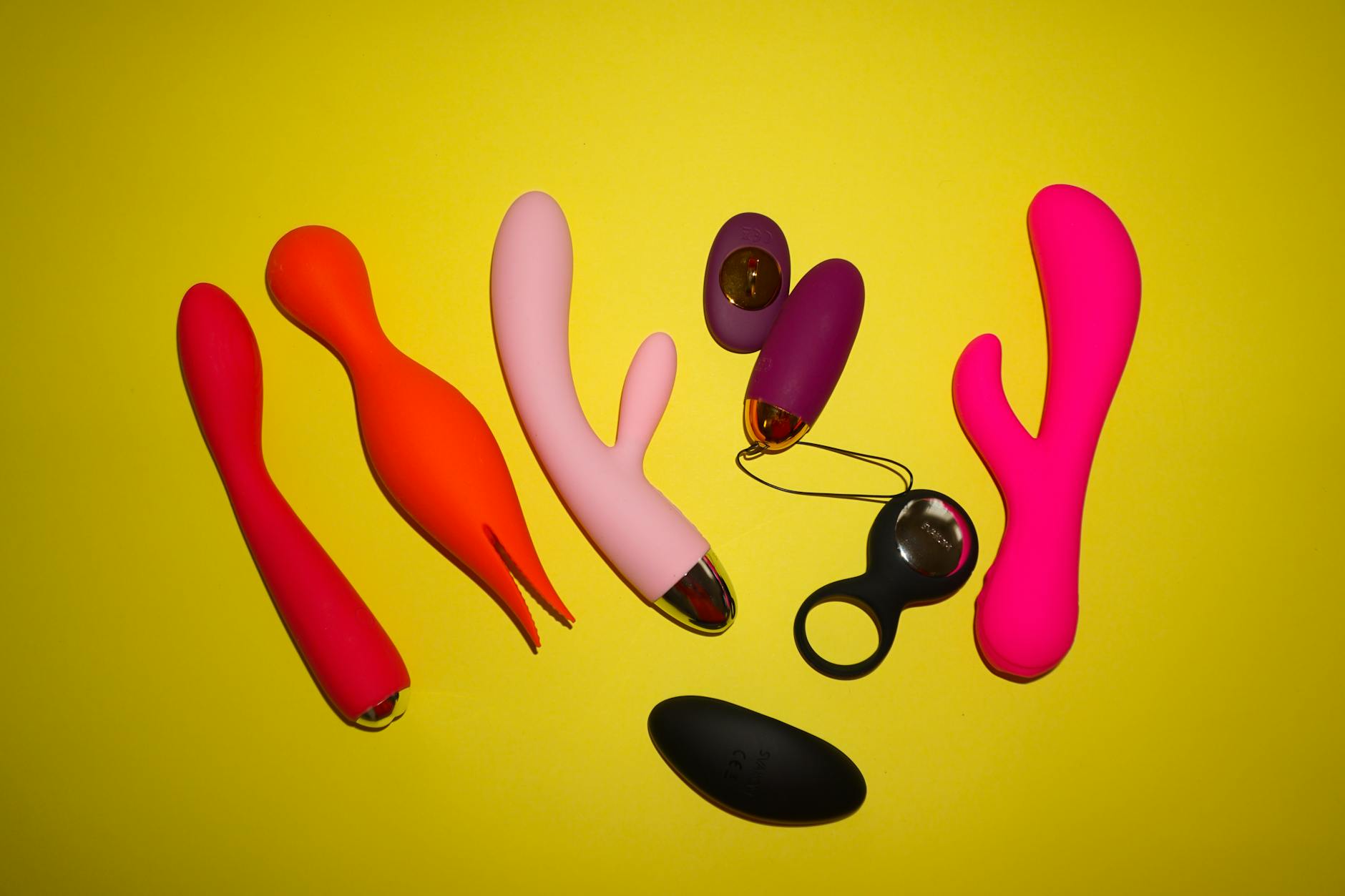
Let's start with what's actually happening
Your body takes longer to warm up. That's not a flaw. That's data.
Most of us grew up watching sex in movies where arousal happens in about 30 seconds. Real bodies don't work that way. And as we move through different life stages, as stress shifts, as hormones change, the timeline stretches. A lot of people find that what used to happen in five minutes now takes 15 or 20. Some need 30 minutes or more. All of that is normal. None of it is broken.
The problem isn't the time. The problem is the shame we pile onto the time.
Using a lemon vibrator when you need longer to build arousal isn't about forcing faster results. It's about building a sustainable rhythm that actually works for your body and stops treating pleasure like a deadline.
Why arousal takes longer for some people
There are about seven major reasons this happens, and most of them are entirely fixable.
Stress and mental load. When your nervous system is processing the day, work deadlines, family logistics, or relationship friction, your body doesn't have room to shift into arousal. Your brain is literally taking up the bandwidth that pleasure usually occupies.
Hormonal transitions. Whether it's shifts in your cycle, coming off hormonal birth control, early perimenopause, or the postpartum period, changing estrogen and progesterone affect how quickly blood flows to the genitals and how ready your nervous system is to respond.
Medication side effects. SSRIs, blood pressure meds, antihistamines, and a dozen others can extend the arousal timeline. This isn't permanent if you're on them, but it's real.
Physical disconnection. If you've spent months or years not prioritizing pleasure, your body's arousal pathways get quieter. They're not dead. They're just out of practice.
Partner dynamics. If you're used to initiating sex but your partner wants you to be the one responding, or vice versa, that mismatch creates friction that slows everything down. Same with pressure to come, or to come quickly.
Pelvic floor tension. A tight pelvic floor doesn't just affect sensation. It keeps your nervous system in a low-level alert state, which makes it harder to relax into arousal.
Aging and natural shifts. As you move through your thirties, forties, and beyond, the speed of genital blood flow naturally decreases. Completely normal. Completely workable.
The good news is that every single one of these responds to patience and the right approach.
How a lemon vibrator changes the equation
A lemon clitoral vibrator like the Lem works differently than other vibrators because it uses suction and gentle pulsing instead of direct vibration. That matters when you need extra time.
Direct vibration requires your nervous system to be already somewhat aroused to feel good. It's loud. It demands attention. If you're not ready yet, it can feel jarring or even numbing.
Suction-based stimulation, by contrast, wakes up the tissue gently. It draws blood to the area without requiring you to already be there. The sensation is building, not demanding. You can use it on lower settings for 10, 15, or 20 minutes before you even feel like you're "doing" anything, and your body is literally priming itself the entire time.
That's the shift. Instead of treating arousal like a light switch that turns on or off, a lemon vibrator lets you treat it like a dimmer.
The actual timeline that works
Here's the framework I recommend to people who need longer arousal.
Minutes 0-5: Context setting. Before you touch anything, close the loop on the day. Send one message you forgot to send. Put the phone in another room. Tell your partner you need 20 minutes. Tell them you don't want to be touched yet. Literally just narrate what you're doing. Your nervous system needs to know there are no unresolved tasks.
Minutes 5-10: Subtle touch. Use your hands or a soft object (a silk scarf, your hair) on your body. Not your genitals. Neck, inner arms, thighs, belly. The lemon vibrator isn't here yet. You're just waking up sensation.
Minutes 10-15: Introduction. Turn on the Lem at a low setting (1 or 2). Don't aim for the clitoris directly. Start on the mons pubis or the outer labia. The goal isn't pleasure yet. It's familiarity. You're letting your body remember what this feels like.
Minutes 15-25: Building. Move to the clitoris directly, still on a low setting. Add lubricant if you want. This is where you might start to feel actual warmth or interest. Don't push for it. Notice it.
Minutes 25+: Play with intensity. Now you can increase settings, experiment, move around. Your body is actually ready.
The entire timeline is 20 minutes minimum. Many people find that building in this way, without rushing, leads to fuller, more satisfying pleasure than they used to get when they were chasing speed.
Making space for the longer timeline
Using a lemon vibrator when arousal is slow only works if you stop treating time as the enemy.
That means scheduling pleasure. Not because it's romantic to plan a specific night, but because you need to know you have 25 uninterrupted minutes. You can't build slowly if you're half-listening for your partner to come home or watching the clock. Block the time. Protect it.
It also means letting your partner know. If you're with someone, they need to understand you're not being withholding or unresponsive. You're taking care of yourself. If they're in the room with you, they need to know the first 20 minutes might just be you and a vibrator and silence. That's the whole date.
It means releasing the goal. The endgame doesn't have to be orgasm. Some days it will be. Some days you'll get to minute 18 and realize your body doesn't want to go further today, and that's fine. You still spent 18 minutes being patient with yourself.
If you're struggling with how to use a lemon vibrator when arousal takes longer to build, the framework is the same. The variable that changes is what you're working with, not the principle.
Working with a partner on the longer timeline
Most relationships hit friction right here. One partner is ready in five minutes. The other needs 20. One sees time as foreplay. The other sees it as stalling.
The fix is to separate "your arousal time" from "our time together." You take 20 minutes with a lemon vibrator, alone, building your own arousal. Then your partner joins in when you're already warm. This isn't selfish. It's informed.
Alternatively, your partner can participate in those 20 minutes without it being about them. They can be in the room reading, or giving you a shoulder massage, or watching. There's a huge difference between "waiting for you to be ready" and "supporting you in getting ready." One feels like obligation. The other feels like care.
If this feels weird or uncomfortable, that's worth examining. If you have a partner who's genuinely impatient with your body's timeline, that's a relationship issue, not a pleasure issue. How to use a lemon vibrator when you feel pressure to perform with your partner goes deeper into that dynamic.
When the longer timeline is actually fine
Something I notice with clients is that the moment they stop fighting the timeline, pleasure actually improves. Not because they're going faster, but because they're not in a state of low-level panic about being "too slow."
Your nervous system can't simultaneously be rushing and be relaxed. You have to pick one. When you pick relaxed and use a lemon vibrator that encourages slow building, everything shifts. The sensation is deeper. The pleasure lasts longer. Orgasms, when they happen, feel different.
Slow is not a bug. It's often a feature you didn't know you were missing.
FAQ: Arousal, time, and lemon vibrators
Why does my arousal take longer now than it used to?
Arousal speed naturally changes across your lifespan due to hormonal shifts, life stress, medication changes, and aging. It's not a sign of declining desire. It's a sign your body is changing, which is information you can work with.
Can a lemon vibrator actually speed up my arousal?
Not speed it up, but make the timeline feel easier. The suction-based sensation of something like the Lem builds arousal gently without demanding you already be halfway there. Many people find that using a lemon clitoral vibrator on lower settings for longer is more effective than chasing intensity.
Is it normal to need 20 or 30 minutes to feel aroused?
Completely normal. Studies show the average arousal time varies wildly between individuals and across a single person's life. If your body takes 30 minutes to warm up and you stop fighting that, pleasure gets better, not worse.
Should I use lube with a lemon vibrator if I'm slow to arouse?
Yes, even if you're not physically dry. Lube reduces friction, which lets you use a lemon vibrator for longer without any physical irritation. It's also a signal to your body that you're settling in for a longer session, which can help relax tension.
What if my partner gets bored while I'm building arousal?
That's a conversation, not a you problem. Your timeline is valid. If someone can't respect that without making it about them, that's a compatibility issue to address outside the bedroom. Some partners genuinely enjoy the longer buildup once they understand it's not about them.
Can I use a lemon adult toy every day while building arousal?
Yes. Daily or multiple times a day is fine. Your body won't become "dependent" on a lemon vibrator or lose sensitivity to it. Some people use one regularly and find their natural arousal actually becomes faster and easier over time.
The real shift
Pleasure doesn't have to be fast to be good. When you stop measuring yourself against a timeline that was never yours, and you use the right tools to build arousal at your actual pace, the whole experience opens up.
A lemon vibrator isn't a shortcut. It's permission to slow down.
If you're ready to explore this more, schedule a conversation with us. We're here to help you find what actually works for your body, not what works in theory.